Hermandad
Hermandad De Nuestra Señora De Las Angustias
For unknown reasons, their processional duties ceased until 15th March 1875, when it was decided to reorganise them. During the Civil War, the image of Virgen de las Angustias was destroyed, with only the head, the work of the Catalan sculptor José Capdevilla, being recovered. Once the war ended in 1946, it was decided to order a statue of Nuestra Señora de las Angustias that was as similar as possible to the one that had been destroyed, and to place the head of the previous image on it. The restoration was carried out by the Galician sculptor Urbano Parcero, who also created the Christ that currently shares the processional throne with the Virgin.
Virgen del Primer Dolor
The image shows her with her hands clasped, looking sad and resigned in front of the cross. Talleres El Renacimiento, 1927.
Cristo de la Agonía
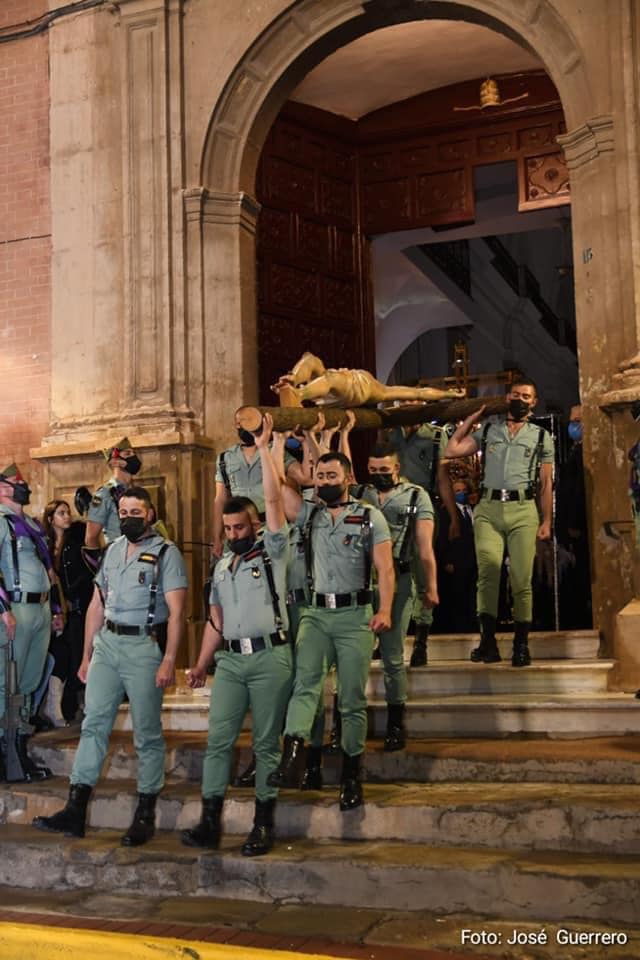
The sculpture depicts a crucified Christ with half-closed eyes and a slightly open mouth, of admirable perfection. It is currently carried by a squadron of the Spanish Legion, King Alfonso XIII Brigade, from Viator. Talleres El Renacimiento, 1927.
El Calvario
It is one of the pasos which best reflects the final passage of the Passion. It shows us Christ Crucified, facing the Virgen María and María Madgdalena, next to San Juan at the foot of the cross in a perfect compositional balance of the scene. Conjunto de Talleres El Arte Cristiano, 1944.
Virgen de las Angustias
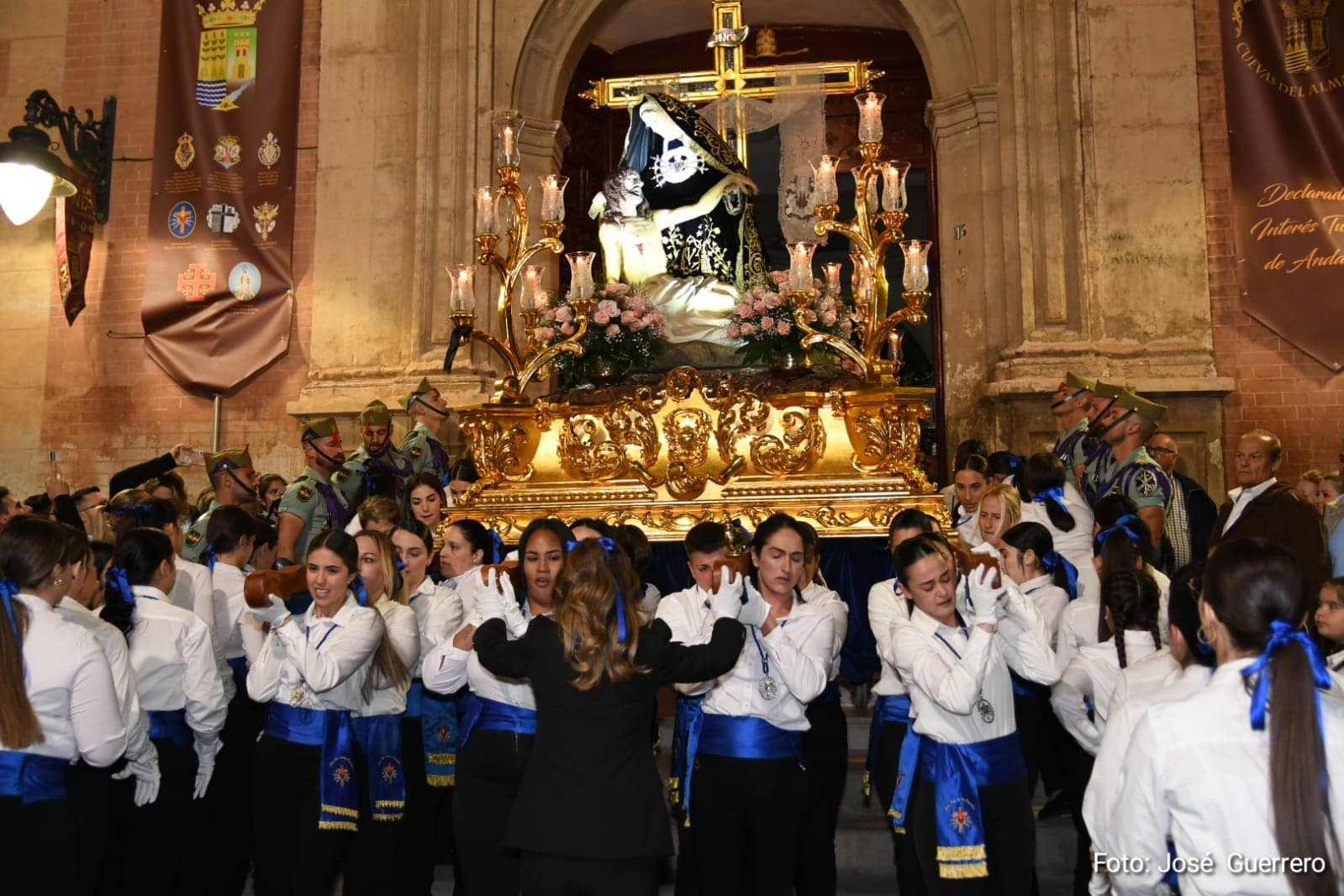
Possessing a serene beauty, her body is covered with a velvet cloak embroidered in gold, a valuable example of the craftsmanship in Cuevas del Almanzora. With the lifeless body of Jesús in her arms, this image shows a clear example of virtuosity in the representation of the human figure. Next to them stands a large cross from which hangs a shroud. It is carried on a golden Neo-baroque processional throne, carved from red pine wood. The processional throne is carried on the shoulders and guided entirely by women. Both images in the ensemble were created by Urbano Parcero in 1944, except for the head of the Virgin, which comes from the previous image by José Capdevilla.
The slow but elegant steps marked by the braceras (float bearers), the artistic value of the images, and the skilful compositional structure make this procession one of the most attractive of our Holy Week celebrations.
Living Biblical Scene:
Jesús Preso
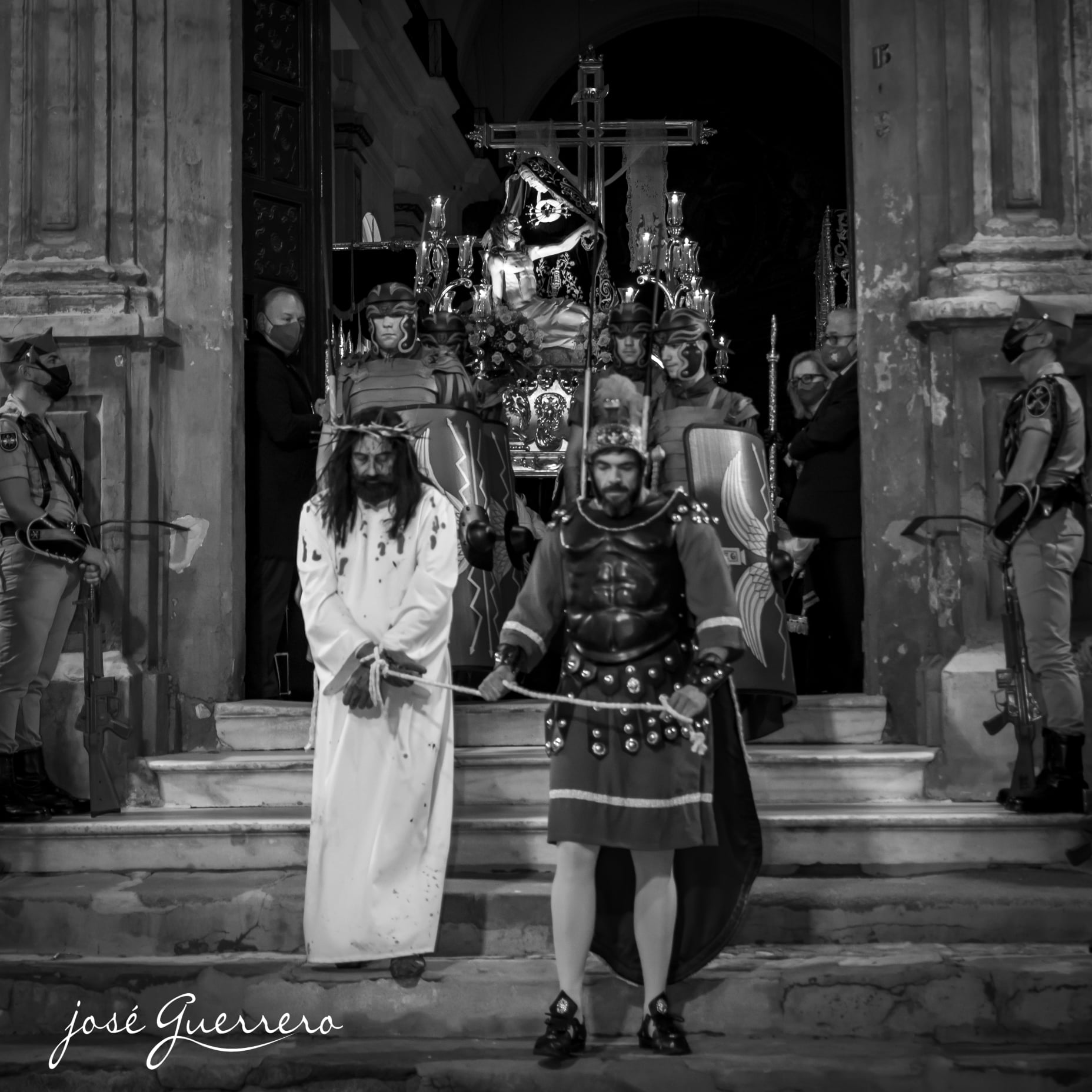
This is a living representation of the moment when Jesús was arrested. With his hands tied with a rope and a Roman pulling on it, this scene is performed throughout the penance station.
Gallery
Check Out All the Details of the 2026 Holy Week Processional Timetable
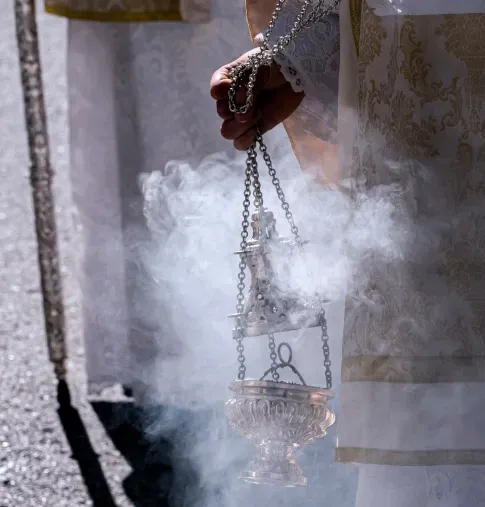
Amidst incense, music and devotion, Holy Week comes to life once again in our streets. Every procession, every detail and every moment have been carefully prepared to ensure you enjoy a unique experience. Discover the history, timetables and everything that awaits you in a celebration that combines faith, culture and tradition.
Get ready to experience Holy Week like never before.