Hermandad
Real Hermandad de San Juan Evangelista, Nuestra Señora de La Esperanza, Santas Mujeres, Verónica y María Magdalena y Santísimo Cristo de La Salud
History and Foundation
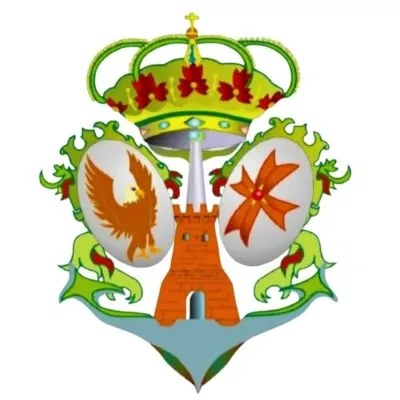
The brotherhood was most likely founded in the late 17th century and was the most purist in its statutes, as it required proven nobility to belong to it. Its main images were destroyed in the Civil War. They were replaced by others after the war. However, in the late 1950s it was no longer active, until the 1970s, when a group of young people got involved. In 1993, Felipe de Borbón accepted the title of Honorary Hermano Mayor (president), which is why the emblem of the brotherhood is topped with a royal crown and has been granted the title of Royal.
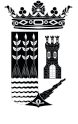
The emblem is a heraldic ensemble supported by the anchor of hope, with the Tower of Homage, an essential element of Cuevas, in the centre. On both sides appear the eagle, symbol of San Juan, and the Cruz of the Orden of San Juan of Jerusalem, topped by a royal crown in honour of Don Felipe de Borbón, Honorary Hermano Mayor of the brotherhood, as certified by the document from the Royal Household dated 14th June 1993.
They make their first appearance on the night of Spy Wednesday and form part of the magna (grand and joint) procession on Viernes Santo morning.
María Magdalena
This image, full of sweetness and charm, depicts the moment when the holy woman entertains Jesús in the Pharisee's house. This work is the creation of Fernando Murciano Abad, 2014.
Santa Mujer Verónica y Stmo. Cristo de la Salud
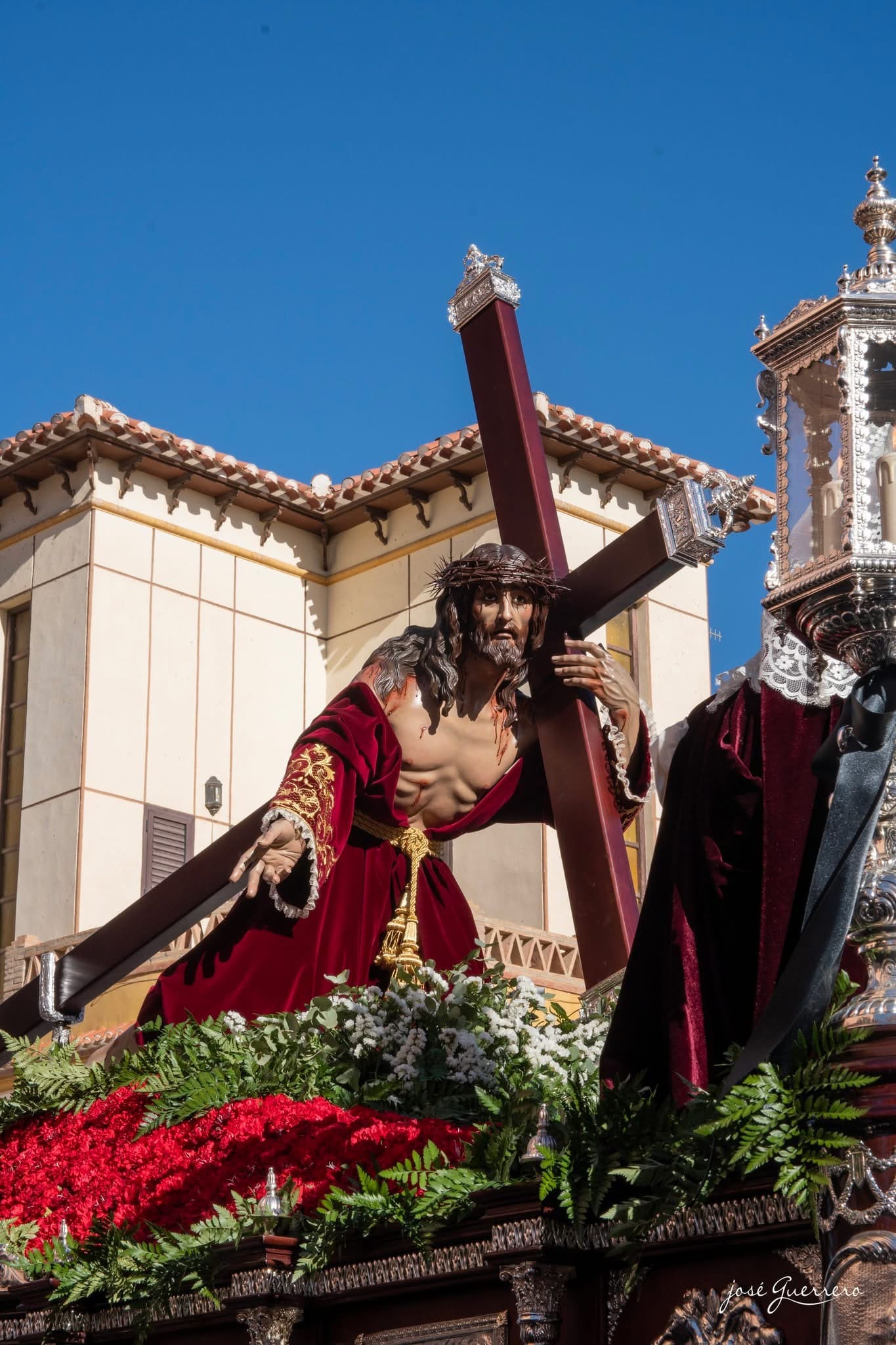
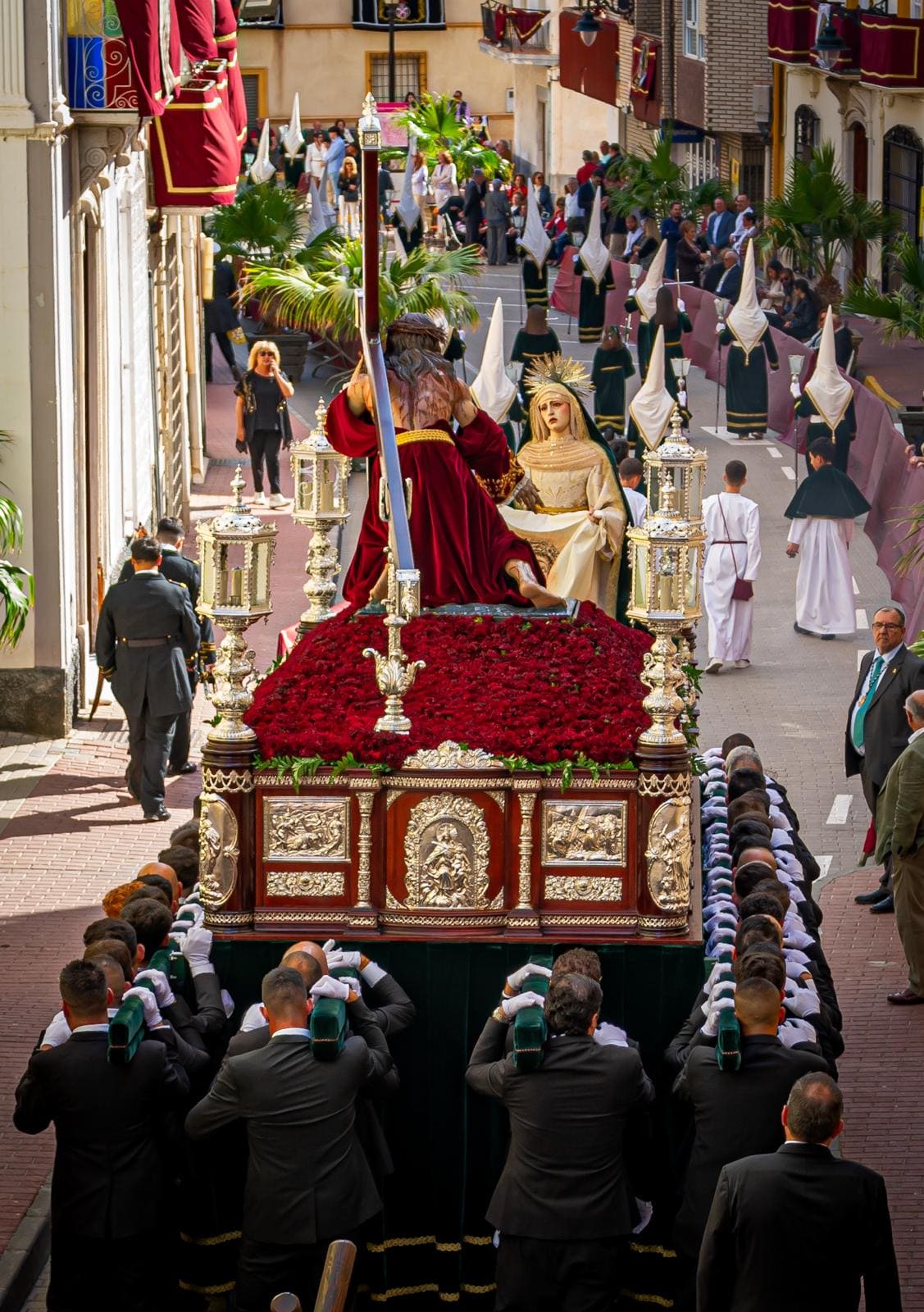
It depicts the moment when Veronica wipes Jesús' face (VI Station). Nuestro Padre Jesús de la Salud is an artwork by Fernando Murciano Abad, 2014. It was blessed at Nuestra Señora de la Encarnación Church on 22nd February 2014 and is worshipped in the same Church. The Verónica is also a work of Fernando Murciano Abad from the same year. Both images are paraded on a processional throne carried by costaleros on Spy Wednesday and on Viernes Santo.
San Juan Evangelista
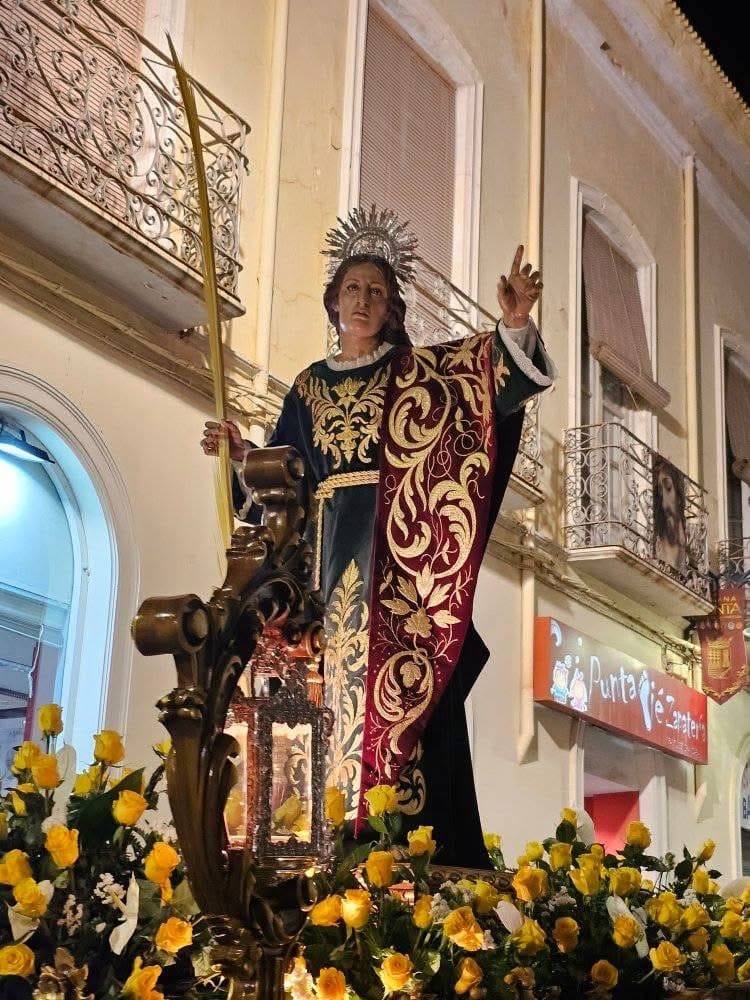
This work by Fernando Murciano Abad (2014), who is the head of the brotherhood, depicts the figure with an outstretched hand and carrying a palm branch, lending the image an admirable expressiveness. In front of him parade the alzacolas (penitents wearing tunics with long tails).
Ntra. Sra. de la Esperanza
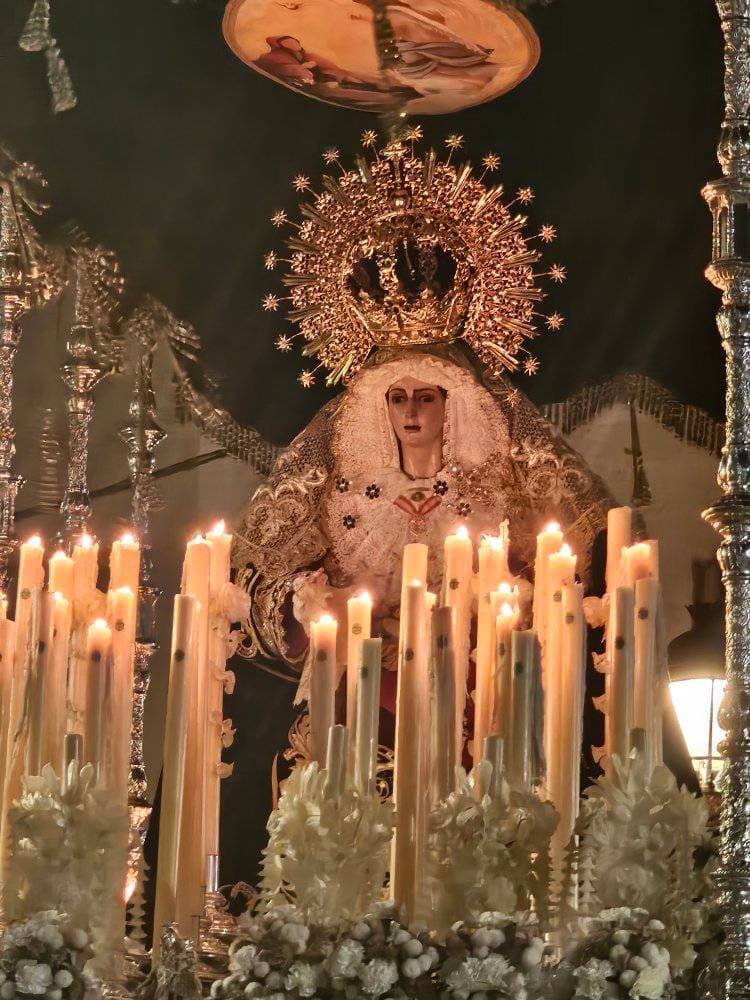
It is an image from the Seville School of Imagery, created by the sculptor Juan Manuel Miñarro in 1991. It was blessed at the Nuestra Señora de la Encarnación Church on 19th March 1991. Three years later, it was displayed in procession for the first time on Spy Wednesday, on 30th March 1994. It was paraded by costaleros on a pallium made by the Sevillian goldsmiths, the Marín Brothers. It closes the parade of the brotherhood on both Spy Wednesday and Viernes Santo. It is worshipped in the Nuestra Señora de la Encarnación Church, and both the Virgin and Christ are transferred on Domingo de Ramos.
Living Biblical Scene: la Cabeza de San Juan
It is a living representation of the moment when the head of San Juan Bautista was delivered on a silver platter to Salomé by order of Herodes Antipas.
Gallery
Check Out All the Details of the 2026 Holy Week Processional Timetable
Amidst incense, music and devotion, Holy Week comes to life once again in our streets. Every procession, every detail and every moment have been carefully prepared to ensure you enjoy a unique experience. Discover the history, timetables and everything that awaits you in a celebration that combines faith, culture and tradition.
Get ready to experience Holy Week like never before.