Archicofradía
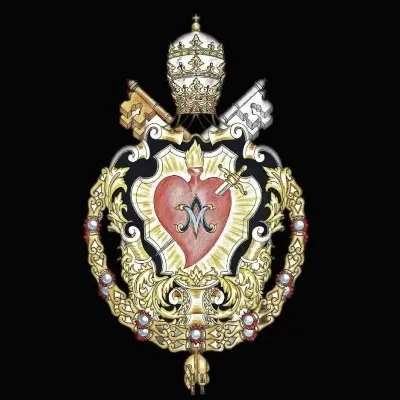
Pontificia y Real Archicofradía de María Santísima de los Dolores
They carried out penance station on Jueves Santo and on Viernes Santo, with four pasos (icons). Their main image, María Santísima de los Dolores, takes part in two more processions: the Viernes de Dolores procession and the Santo Entierro procession on Viernes Santo.
History and Foundation
Although there is no documentary evidence, there are indications that its foundation dates back to around 1640. What we do know for certain is that on 2nd July 1716, the reform of its statutes was approved, making it the oldest in Cuevas del Almanzora. It was declared Royal by King Alfonso XIII in 1929, and in the same year it was also declared a Pontificia Archicofradía. After the Civil War in 1944, the brotherhood was reorganised.
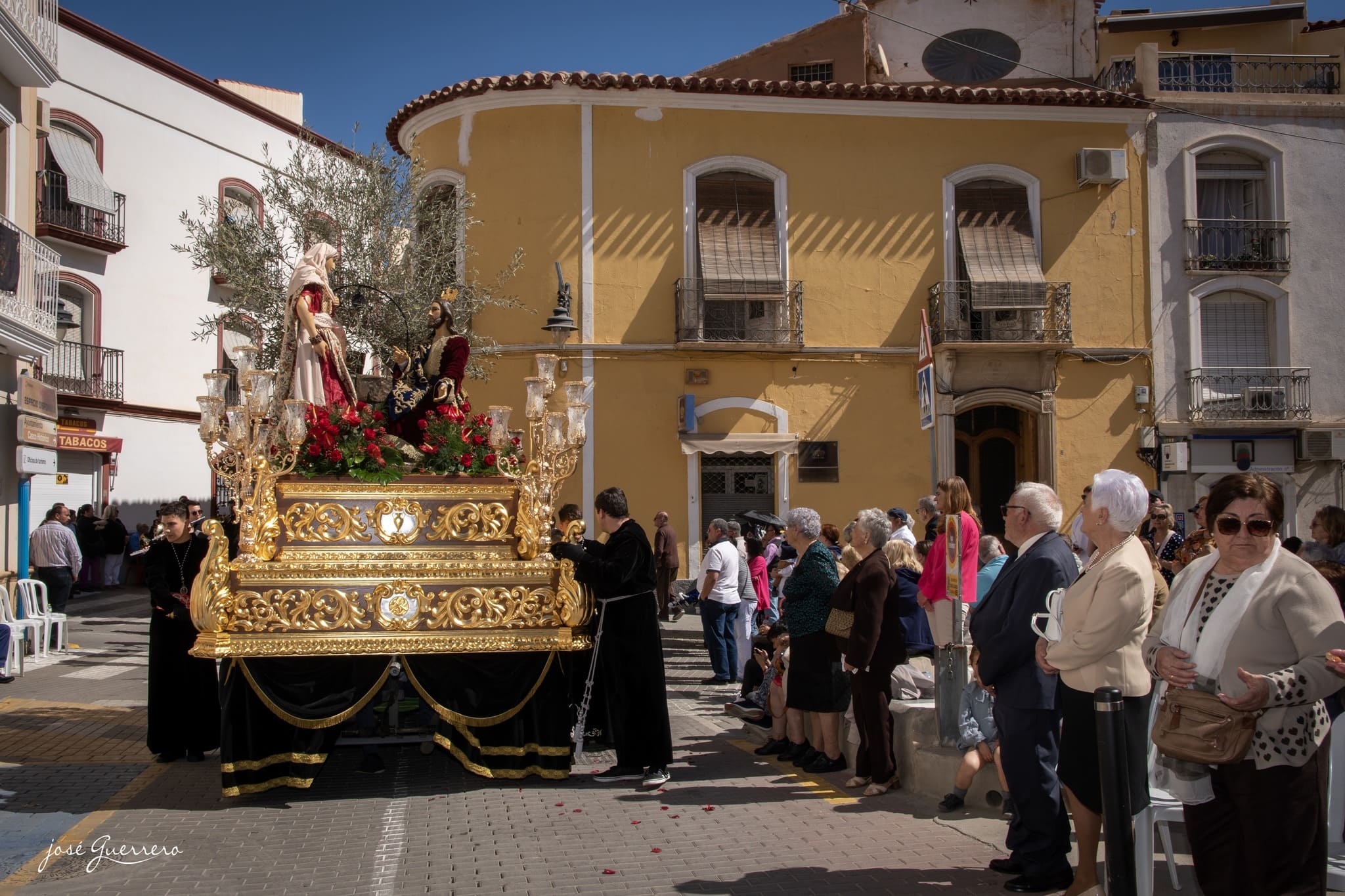
La Samaritana
It is represented by a young woman of serene beauty, focused on the gaze of Jesús. The simulation of the well and the excellent placement of the tree give the ensemble a harmonious and balanced appearance.
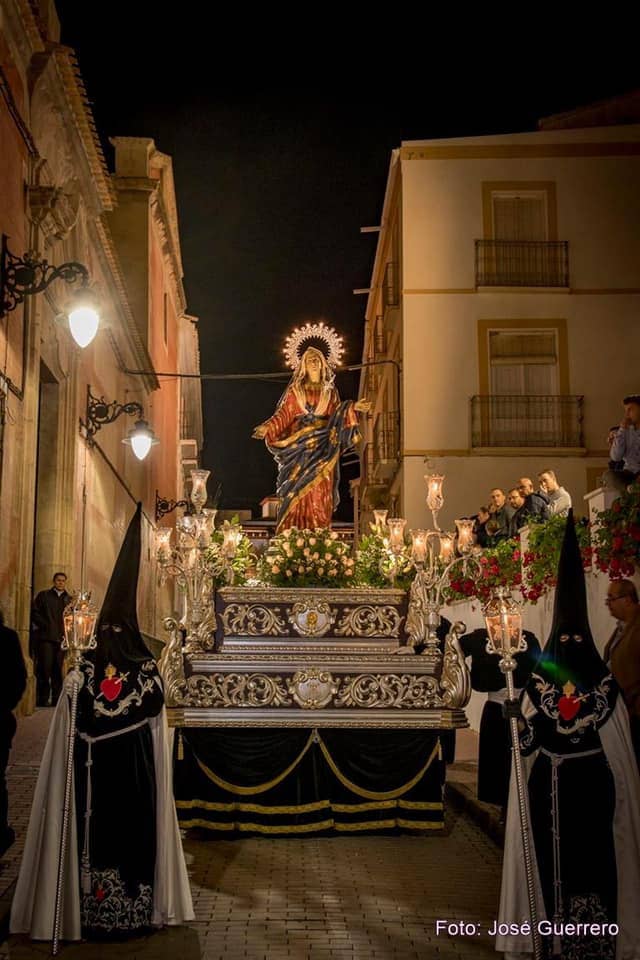
La Virgen del Primer Dolor
It is a polychrome wood carving of exquisite modelling, with beautifully folded robes and a halo with 12 luminous stars above her head, with her hands open, her gaze fixed on the sky and the dagger stuck in her chest. It is considered as a faithful copy of the previous image destroyed in the war. This work is attributed to the Murcian sculptor José L. Roca.
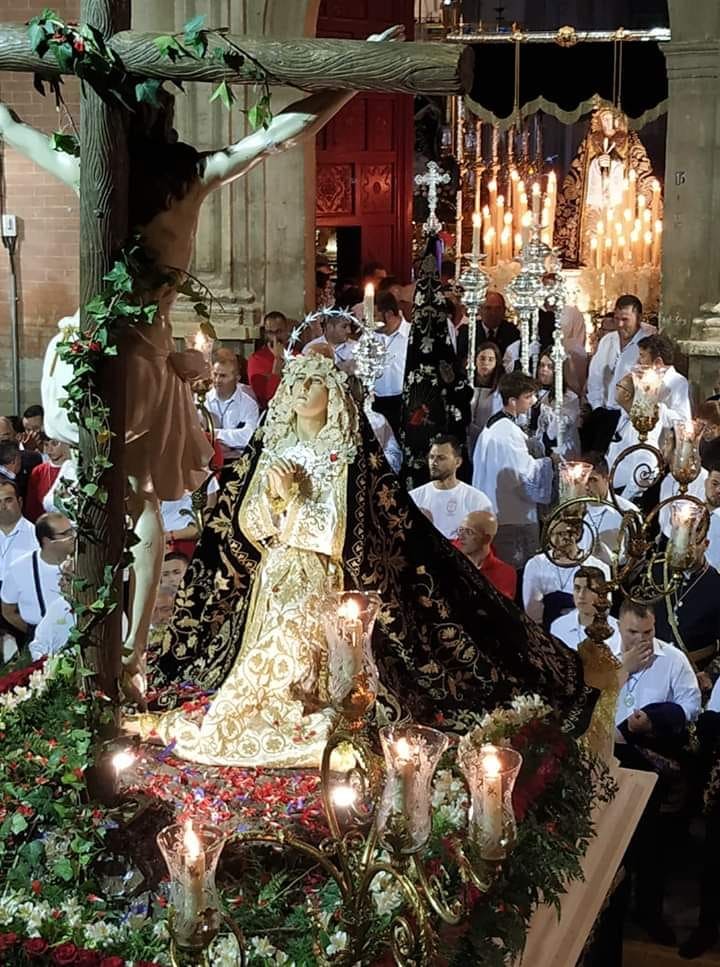
Arrodillá al pie de la Cruz y Cristo del Consuelo
The Virgin is a dressed image by an unknown artist. She is kneeling at the foot of the cross, contemplating her son, with her hands clasped in supplication and her gaze turned upwards in an expression of restrained sadness. She wears an embroidered white robe and a large black velvet cloak, a true jewel of local craftsmanship, embroidered between 1931 and 1932 by members from this brotherhood.
The Cristo del Consuelo is the work of the Murcian sculptor Francisco Liza Alarcón and was blessed on 3rd April 1993. It is a life-size image attached to three nails, with its head tilted to the left and its eyes half-open, looking up at the sky. Its beautifully sculpted face is very much in keeping with the Murcian Baroque tradition, with little blood, fluid modelling, a smooth texture and impeccable technical perfection. This ensemble is carried on a wooden processional throne.
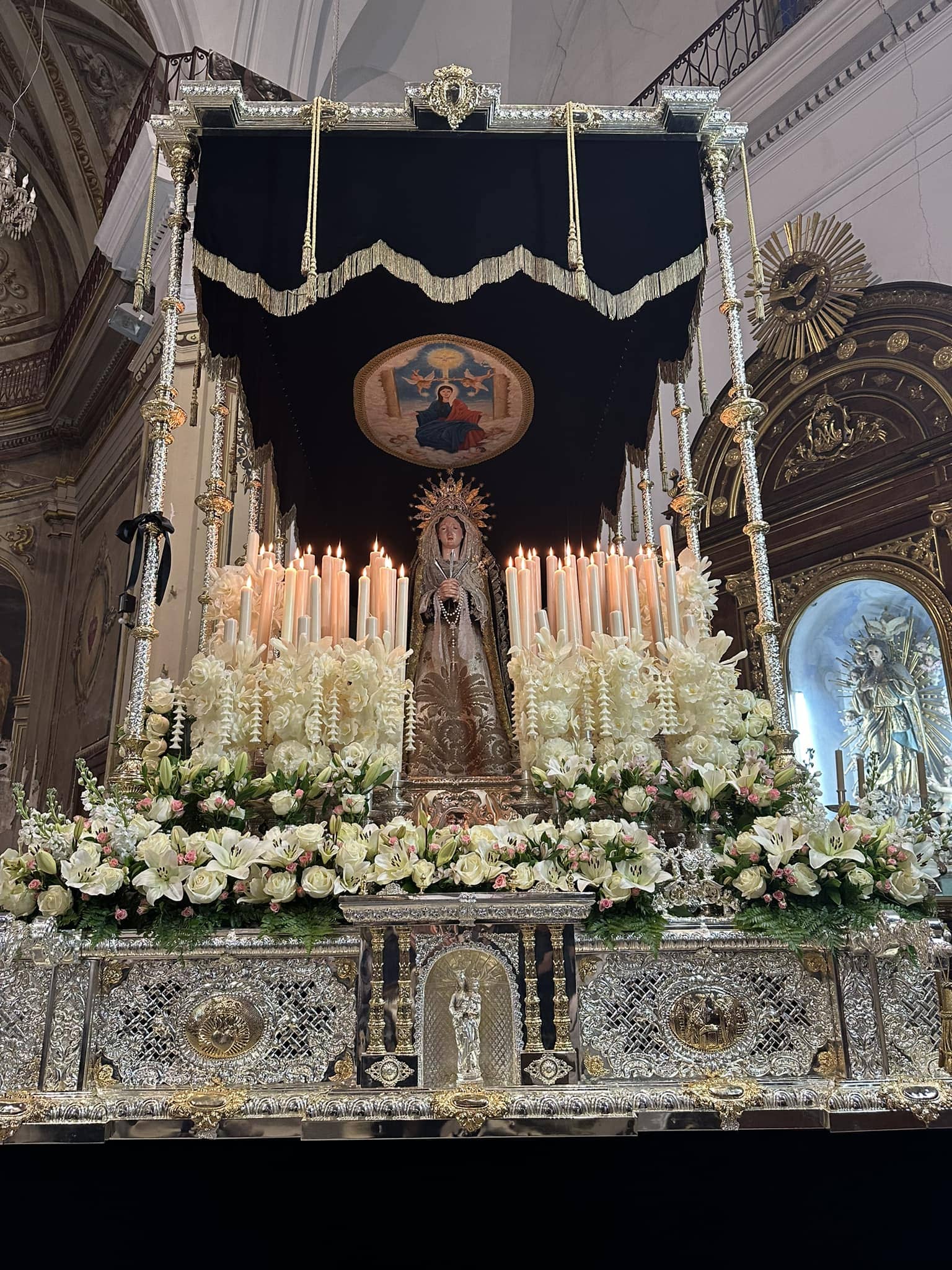
María Santísima de los Dolores
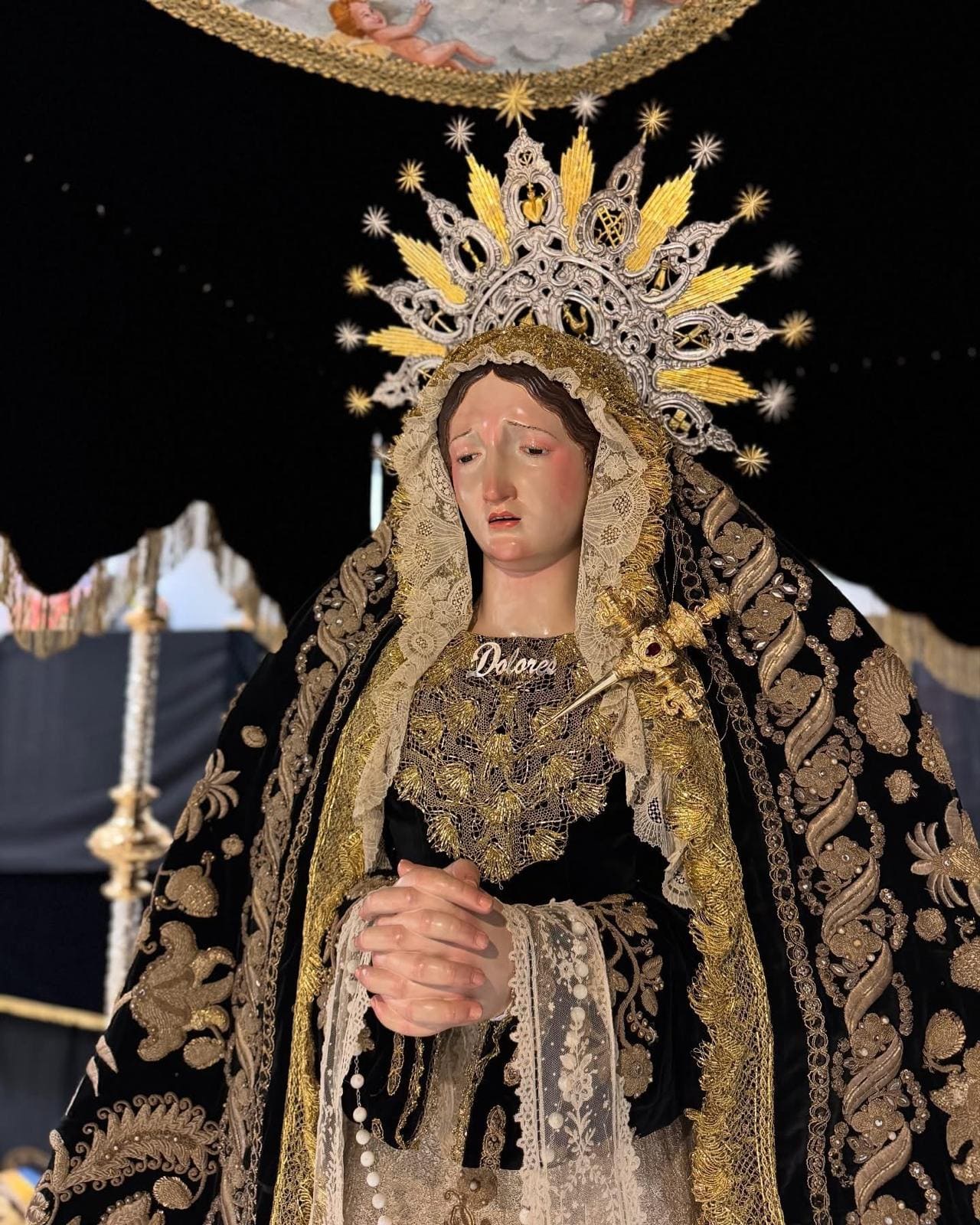
It is a figure with a marked realist style, which mysteriously combines a sense of sadness with the sweet expression on her face. She is dressed in a white gown embroidered in gold and a black velvet cloak embroidered in gold and precious stones, made in the workshops of Artesanos de Alcantarilla in 1846. As the author is anonymous, no information is known about this figure. Following its last restoration in 2013, and after a study by the restorer, it is known that it has been repainted after the Civil War. It is carried in procession on a silver processional throne under a pallium carried by costaleros. This image is one of the most important in our Holy Week.
Los Armaos
This is a representation of the Roman Legion, led by the captain, accompanied by four pairs of soldiers who make way for another soldier carrying a banner with the initials “S.P.Q.R.”.
Reina of Saba
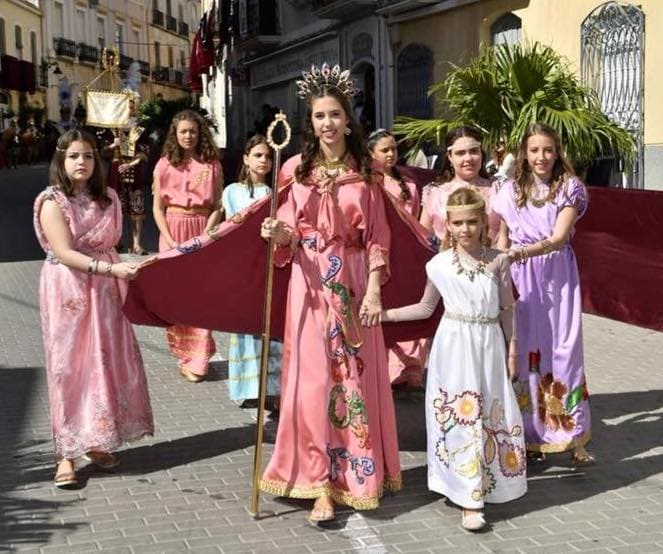
Represented by a young woman dressed in a lavish costume, accompanied by her slaves.
Gallery
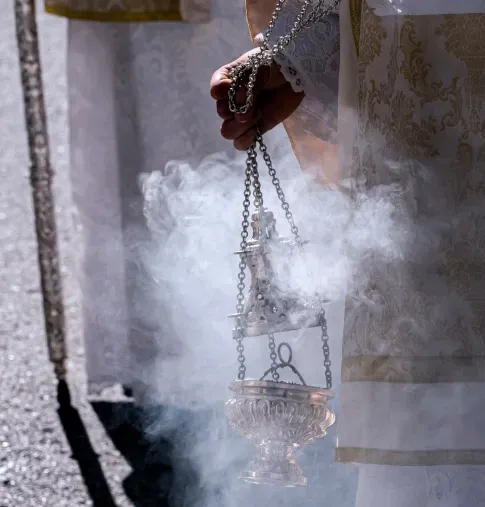
Check Out All the Details of the 2026 Holy Week Processional Timetable
Amidst incense, music and devotion, Holy Week comes to life once again in our streets. Every procession, every detail and every moment have been carefully prepared to ensure you enjoy a unique experience. Discover the history, timetables and everything that awaits you in a celebration that combines faith, culture and tradition.
Get ready to experience Holy Week like never before.